
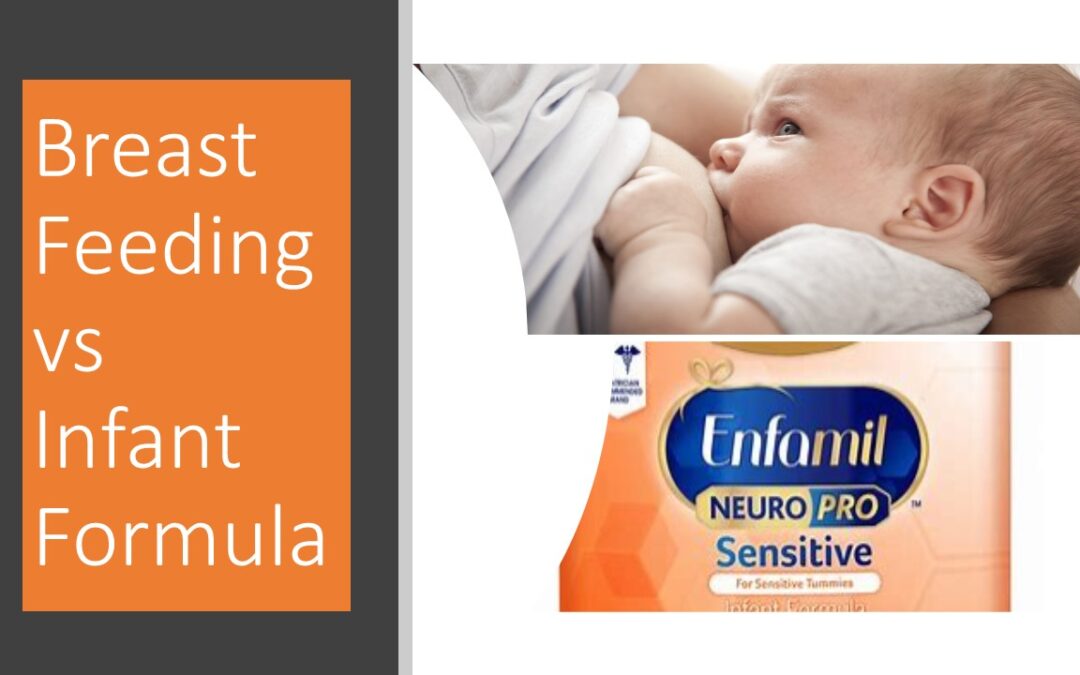
Another LÒÓK at Breast Feeding
The shortage of baby formula in the United States has caused the Catholic Wise Guy to reflect more deeply on women’s breasts.
Let’s face it: men love women’s breasts. Women know this: cleavage has been a prominent feature of female appearance for centuries.
What did God have in mind when he created such beauty? Some breast aficionados rate them the 8th wonder of the world. Prior to the rise of Internet pornography, Playboy and other magazines made a fortune on the artistic display of female breasts. The Wise Guy acknowledges the value of female breasts in attracting and pleasing men, thereby facilitating the reproduction of our species. But also important, if not more important, is their Divine utility in feeding infants.
In watching the news and reading Internet articles about the formula shortage, the Wise Guy found no mention of breast feeding as part of a solution. This surprised him – it may not be the best option, but it is surely an option. The Wise Guy concluded it’s time for another LÒÓK at breast feeding.
Solving any problem requires that we first clearly define it. Our problem is not a shortage of baby formula but feeding our babies. Babies continue to be born in America despite the best efforts of our thriving birth control and abortion industries. How to feed these babies – that is the question. Regular food or even animal milk does not work well. As he prepares to pontificate (Catholic men are permitted to do this) the Wise Guy senses danger. He may be about to strike a feminists’ hornet’s nest that could create a lot of buzzing and stinging. But, putting on the armor of God, hornet spray in hand, he strides bravely forward.
Reality presents us with two solutions to feeding infants:
- Breast feeding (by the mother or another woman – wet nurse);
- Baby formula.
The criteria for evaluating these is what is best for the infant, the mother, and society.
Breast-feeding has been the leading historical solution to feeding infants. A woman’s milk is healthier than any baby formula. It is more natural, organic, and earth-friendly. Not much carbon is burned in the generation of breast milk but a lot is in the production of baby formula. And the supply chain for breast milk is shorter and more reliable than for formula. Fewer government regulations too.
Any true environmentalist would conclude that breast feeding is healthier and more earth-friendly than baby formula. Furthermore, when done by the mother, it increases the bond between mother and child. And recent studies conclude that breast feeding improves the cognitive development of the baby. What’s not to like?
But physical, social, and economic factors have militated against motherly breast feeding. Some women cannot breast feed or do not want to. If the mother died in childbirth, the baby needed another food source to survive. Since ancient times, wet nurses have stepped up and provided a reliable solution in feeding babies. But wet nurses have fallen out of favor in America. Young women do not perceive wet nursing as a great career choice. Wet nurses might be a cheaper, healthier, greener solution to our problem than baby formula or interrupting the careers of working mothers but selling that idea seems difficult in the American milieu. One hurdle is that wet nurses were often the servants or slaves of the upper-class families whose infants received their milk. Some argue a bit of marketing could help wet nurses make a comeback. But the Wise Guy is skeptical: it would take significant economic incentives and cultural changes to present wet nursing as an attractive career choice to American women.
Over the last 150 years baby formula has become a reliable backup to breast feeding. For many women it has become the primary solution. Why have we become so reliant on baby formula? Social and economic circumstances, sometimes caused by the lack of a male in the household, force mothers to work outside the home, even when caring for infants. All this complicates the situation. The Wise Guy was astonished to learn that the government WIC (Women Infants Children) program consumes half of the baby formula in America. Why would the government encourage poor women to use baby formula (subsidized by the taxpayers) instead of their breast milk to feed their babies?
Breast feeding is the best solution for the baby, the mother, and society. Each mother makes this personal decision but a stronger, more caring network of government, corporate, and social policies can make it easier for her to stay home and breast feed. Maternity leave would be a godsend whether from the government or the employer. The Wise-Guy urges all companies to institute maternity leave, especially those who claim to be family-friendly. And finally, we suggest that couples, if the social support structure is unfavorable to them, prayerfully reflect on their family budget and consider living on one income when their children are infants.
May we join Mary, the mother of mothers, in praying for mothers and their babies!